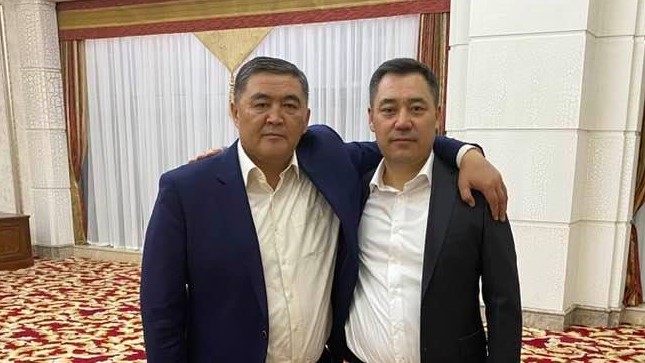
 Kamchybek Tashiev and Sadyr Japarov in 2020. Photo: Kloop.kg.
On February 10, 2026, Sadyr Japarov, the president of Kyrgyzstan, unexpectedly dismissed his political partner and close friend Kamchybek Tashiev from his posts as deputy prime minister and head of the State Committee for National Security. Following their chief’s departure, his deputies also left the committee. In addition, the president removed responsibility for protecting senior officials and key facilities from the committee, placing it in a separate body — the State Guard Service — now directly subordinate to him.
Tashiev and Japarov are not just friends but political allies and partners in the 2020 revolution. They jointly toppled the previous regime, after which Tashiev became the president’s “right-hand man,” heading the security committee and effectively overseeing the country’s entire силовой bloc. Their tandem rested on shared interests. However, beneath the surface of a strong friendship, disagreements were smoldering that apparently led to the split.
First, personal ambition and rivalry. Tashiev did not hide his influence: he was popular among nationalists, security officials, and part of the southern elite. In recent years he increasingly acted as an alternative center of power — publicly criticizing ministers and intervening in economic matters. Japarov, who consolidated power through constitutional changes and the suppression of the opposition, began to see Tashiev as a threat, especially amid rumors that he was laying the groundwork for his own presidential bid in 2027. In Kyrgyz politics, friendship often ends where the struggle for the throne begins. Japarov likely chose to remove a potential rival preemptively, before he gained too much weight.
Second, disagreements on key issues. Despite a common overall line, Tashiev and Japarov differed in their approaches. Tashiev was more hardline: his committee actively cracked down on the opposition but also affected the interests of clans close to the president himself. On border issues with Tajikistan, Tashiev insisted on a tough stance, which led to conflicts and losses, whereas Japarov may have sought compromises for the sake of the country’s international image. There were also economic frictions: Tashiev’s anti-corruption campaigns could touch on the business interests of the president’s family or his allies. Insider leaks circulating on several Kyrgyz Telegram channels hint at a scandal over the distribution of infrastructure contracts — Tashiev allegedly blocked schemes beneficial to Japarov’s circle. In short, recently this looked less like a friendship than a strained alliance coming apart at the seams.
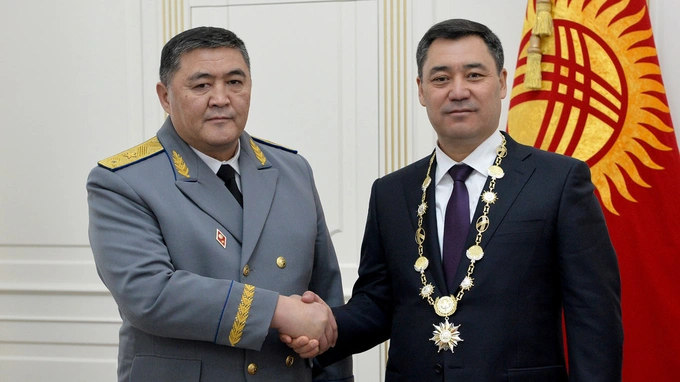 Kamchybek Tashiev and Sadyr Japarov in 2024.
A third factor is Tashiev’s health and his absence from the country. The decree caught him in Germany, where he is undergoing medical treatment (according to official data, he has been there since late January 2026, reportedly with cardiac problems), and this appears less a coincidence than a calculation. Sadyr Japarov chose a moment when Kamchybek Tashiev was physically unable to resist or mobilize supporters. This is a classic tactic of authoritarian systems — removing an opponent while he is weak. Rumors of “poisoning” or “forced treatment” are circulating, but without evidence they remain speculation. One fact is clear: the dismissal was formalized in absentia, underscoring both haste and fears of a possible revolt within the State Committee for National Security.
Three of Tashiev’s deputies were dismissed at the same time, pointing to a purge of the “Tashiev faction” in the security services. The appointment of Jumgalbek Shabdanbekov as acting chairman suggests a bet on a temporary figure loyal to Japarov, lacking the charisma and independence of his predecessor.
Why this was necessary. The resignation helped Japarov consolidate power. He rid himself of a “friend” who had become too influential, in order to head off a potential palace coup. Tashiev’s faltering health provided a convenient opening. Had he not been in Germany, he might have resisted, relying on loyal security officials or media allies.
Forecast. Tashiev’s dismissal is a delayed-action bomb for Japarov’s system. In the coming months, large-scale purges in the силовые structures are likely. The security committee is a key instrument of control over all branches of power, and Japarov will install fully loyal figures. However, this could provoke resentment among officers loyal to Tashiev. Arrests or “voluntary” resignations in the Interior Ministry and the army are possible as a way to preempt dissent.
If Tashiev returns to Kyrgyzstan (and he most likely will, to avoid losing face), he could move into opposition. With his popularity in the south — in Osh and Jalal-Abad — he would be capable of mobilizing protests. It is worth recalling 2020: Tashiev was one of the leaders of the revolution that brought him and Japarov to power, and now he risks becoming a “victim of the regime.” If Japarov takes a hard line — through arrest or corruption charges — Tashiev could end up in exile, as many Kyrgyz opposition figures have before him.
Public discontent is already growing, driven by inflation, corruption, and pressure on the media. Tashiev’s removal is likely to deepen polarization: nationalists may see it as a betrayal, while the opposition will use it as further evidence of authoritarianism.
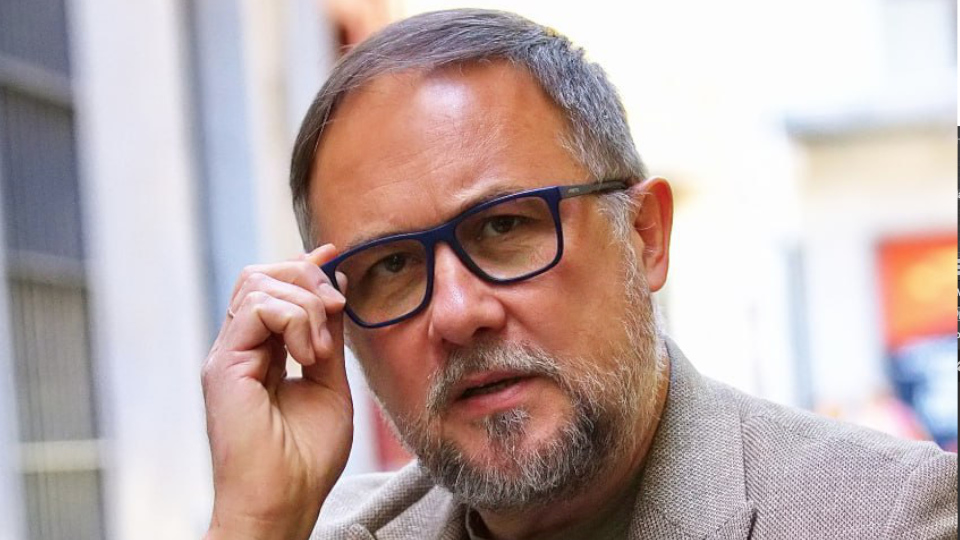 Daniil Kislov, director of the international news agency Fergana.Media
I spoke with Kamchybek Tashiev in person on several occasions in 2010–2011. Even then, I formed the impression that he is not the kind of person who relinquishes power easily. So, in my view, there are two possibilities. Either his dismissal was the result of a carefully negotiated deal between him and Sadyr Japarov — in which case Tashiev received serious compensation and nothing will happen. Or it came as a surprise to Tashiev — in which case he will take it badly, and Japarov will face trouble. In the second scenario, it could all end in yet another “revolution.”
There is also another, rather unexpected version — a “castling move.” In Bishkek, people are saying that Japarov and Tashiev agreed on everything: the latter will run in the presidential election and is highly likely to win — formally without using administrative resources, that is, outright.
In that case, Tashiev would like to serve as president, while Japarov would become prime minister under him. And their friendship and tandem would continue.
-
 17 September17.09Summit of Morning FreshnessCritical minerals, artificial intelligence — what else was discussed at the “Central Asia–Korea” meeting
 -
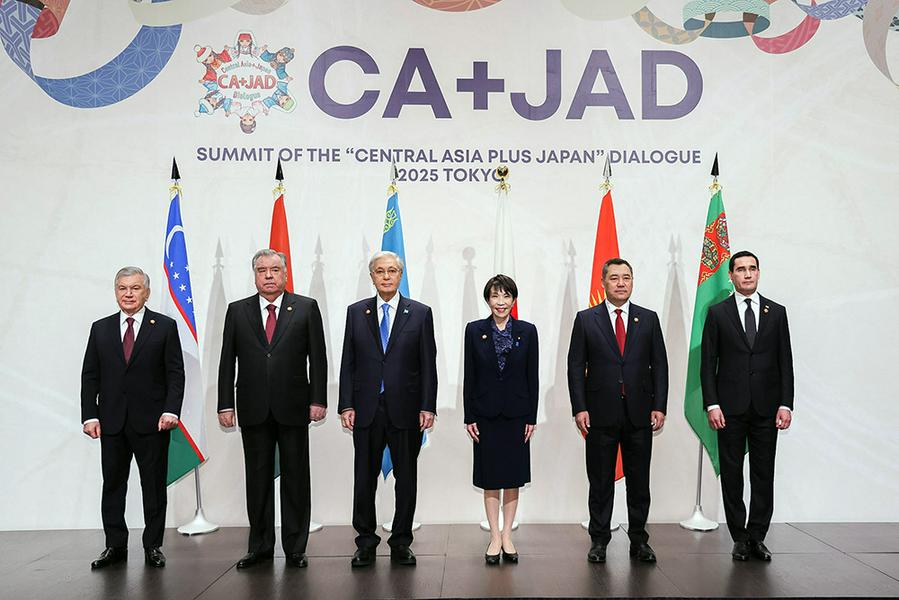 23 December23.12PhotoTokyo DriveJapan to invest about $20 billion in projects across Central Asia over five years
 -
 17 December17.12Sake for SixCentral Asia’s Rapprochement with Japan Comes with Hidden Pitfalls
 -
 15 October15.10A Step Back into the Middle AgesWhy Kyrgyzstan Should Not Reinstate the Death Penalty
 -
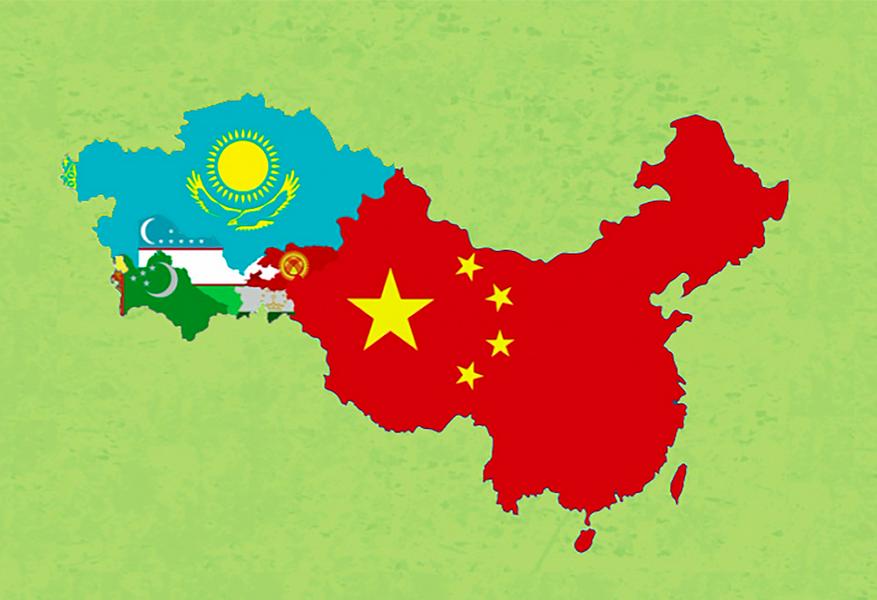 17 September17.09Risky PartnershipWhy Dealing with China Is Harder Than It Seems at First Glance
 -
 30 June30.06PhotoReAction against censorshipDemonstrators in Bishkek protest against the draft law “On the manipulation of information”
-
Former Kyrgyz president Almazbek Atambaev is sentenced to 11 years and two months in jail
-
Tashkent sends troops to Russia’s Victory Day Parade for the first time. There they took part alongside their neighbours
-
With four months to go until the parliamentary elections in Kyrgyzstan, will a new party of power emerge?
-

Violent clashes break out on the Uzbek-Kyrgyz border