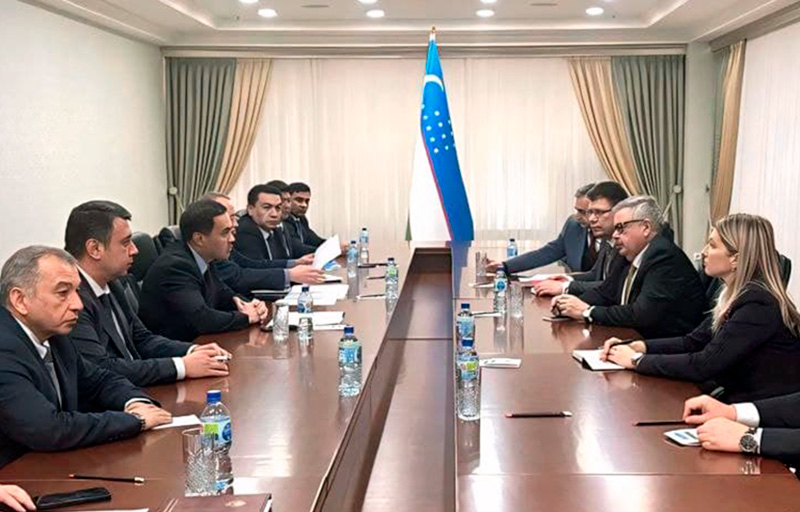
 Uzbek Foreign Ministry press service. Photo courtesy of the Ministry of Foreign Affairs of Uzbekistan.
Uzbekistan has called on Russia to prevent violations of the rights of citizens of the republic—including those who have breached migration regulations—during migration inspections and raids. The Uzbek Foreign Ministry said this in a statement.
On January 26, Uzbekistan’s Deputy Foreign Minister Olimjon Abdullayev met with Russia’s ambassador to Uzbekistan, Alexey Yerkhov. The main focus of the talks was the protection of the rights of Uzbek labor migrants in Russia. Uzbekistan was also represented by its consuls general working in various Russian regions, which, the ministry noted, made it possible to take into account the real situation on the ground. The Russian side included senior officials from the embassy’s consular section, migration specialists, and law enforcement representatives.
“The Uzbek side emphasized the fundamental importance of preventing any form of infringement on the rights and human dignity of citizens of the Republic of Uzbekistan—both law-abiding individuals and those who have committed violations of migration legislation—during migration inspections and raid operations,” the Foreign Ministry said.
Following the meeting, both sides confirmed their readiness to continue dialogue based on pragmatism and mutual respect in order to regulate migration processes and create favorable conditions for the legal employment of Uzbek citizens in Russia. The parties agreed to hold regular consultations to improve cooperation.
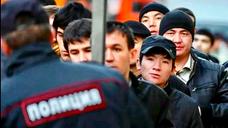
ℹ️ The issue of protecting the rights of Uzbek migrants has become particularly acute following a number of incidents in Russia. In June 2025, Uzbek authorities expressed concern after a law enforcement raid in Moscow’s Sokolniki district, where, according to media reports and eyewitness accounts, physical force was used against migrants. During document checks in a dormitory, National Guard officers reportedly forced migrants out of their rooms, kicking and insulting those who did not move quickly enough. As a result, five or six people were detained and later deported for violating migration rules.
Uzbekistan’s Agency for External Labor Migration said that cases of rough treatment of foreigners by individual law enforcement officers were a cause for regret and concern. The agency stressed that such incidents do not correspond to friendly relations between the two countries and require concrete measures to prevent them.
The situation of migrants from Central Asia in Russia deteriorated markedly after the terrorist attack at the Crocus City Hall concert venue in March 2024, which killed more than 140 people. The suspects in the attack were citizens of Tajikistan. After that, raids on dormitories, hostels, and places where foreigners gather became more frequent, and the number of deportations rose sharply.
In the summer of 2024, Russian lawmakers adopted a large package of amendments to migration legislation, expanding police powers over foreign nationals. Law enforcement agencies were given the authority to detain migrants for up to 48 hours without a court order and to issue deportation decisions.
From February 5, 2025, a so-called “expulsion regime” and a register of controlled persons were introduced. Foreigners included in the register are subject to removal from Russia and are barred from purchasing real estate or vehicles, registering marriages, or opening bank accounts.
In November 2025, Russia’s Interior Ministry removed about 160,000 Uzbek citizens from the register of controlled persons. More than 70,000 were taken off the list after regularizing their legal status with migration authorities. The remainder were removed on other grounds, including leaving Russia within the established time limits.
That same month, during another meeting with Ambassador Yerkhov, Abdullayev also discussed access for the children of foreign nationals to preschool and school education in Russia. Migration inspections and raids were addressed separately, with the Uzbek side stressing that such measures must be conducted correctly and with respect for human dignity, without violating the lawful rights of citizens.