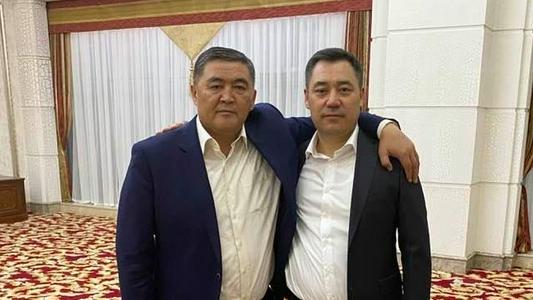
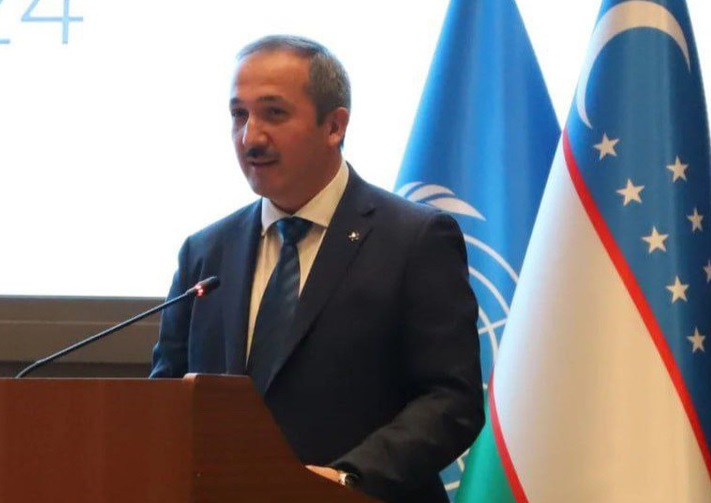
 Ravshan Mamatov. Photo: press service of the Agency for Drug and Firearms Control
President of Uzbekistan Shavkat Mirziyoyev has dismissed Ravshan Mamatov, director of the Agency for Drug and Firearms Control under the Presidential Administration. The corresponding decree was signed by the head of state, the presidential press service reported.
Several days earlier, the president had sharply criticized the agency’s work, saying it was largely limited to “analysis and international cooperation.” He warned Mamatov that, in the absence of tangible changes, his position would be reconsidered. Mirziyoyev also announced an expansion of the agency’s mandate, granting it powers to coordinate the work of relevant bodies and to assess their effectiveness.
In criticizing the agency, the president noted that over the past five years the volume of synthetic drugs seized in Tashkent alone had increased elevenfold. According to him, 95 percent of such substances are distributed online, with payments made in cryptocurrency, and drug laboratories have begun to appear in the country.
Mirziyoyev said that in 2025 more than 1,500 drug users were officially registered in the capital. The actual number of people using narcotics, however, is significantly higher and consists mainly of young people.
Such individuals, he added, spend 20–25 million soums (about $2,000) a month on illegal substances. In an effort to obtain money, they often turn to crime. Last year, 64 people in Uzbekistan committed crimes while under the influence of drugs, with every third incident occurring in Tashkent.
As the president emphasized, officials responsible for combating drug-related crime and organized criminal groups lack the determination to see the work through to the end—specifically, to identify drug supply routes and their financial backers.
A day earlier, it was also reported that personnel changes had taken place in other security agencies. In particular, the president replaced the commander of the National Guard and several senior officials in the Ministry of Internal Affairs.