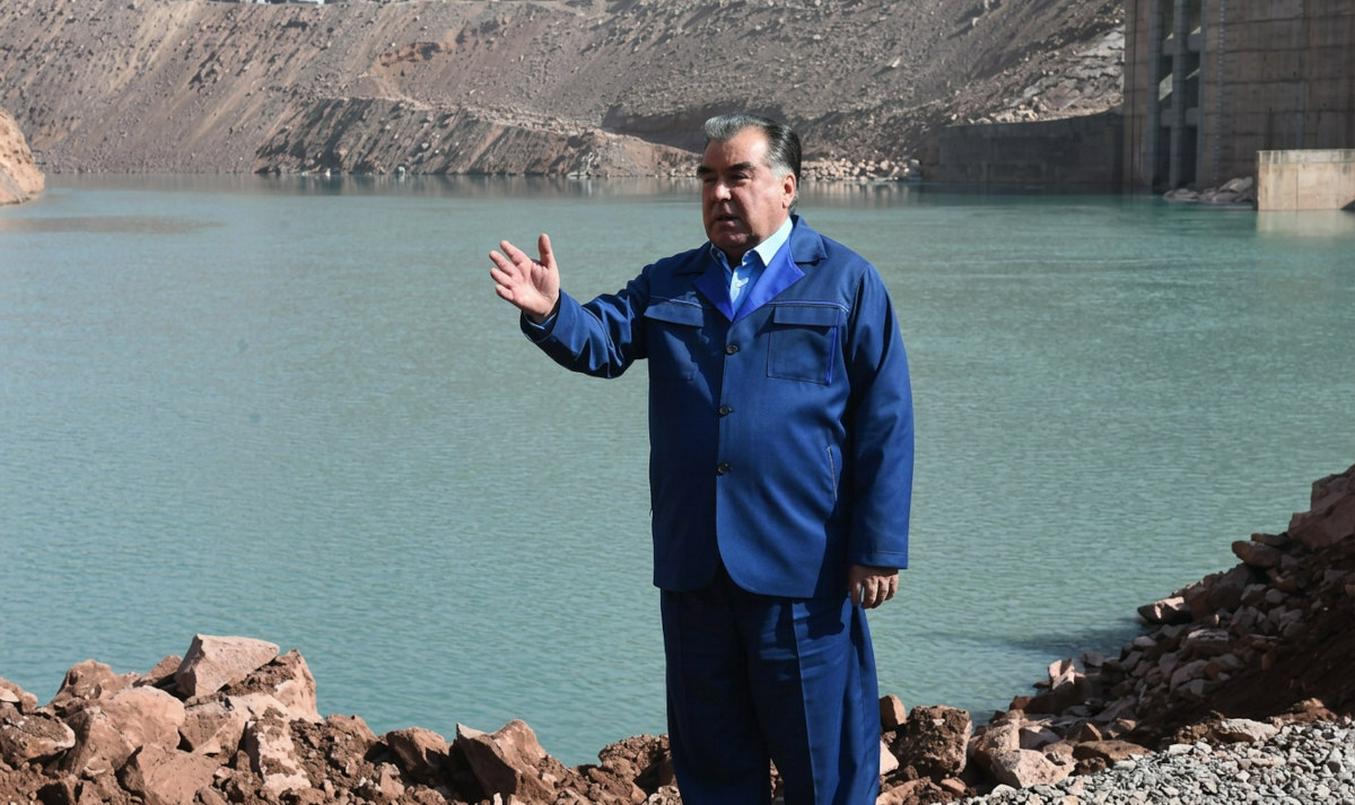
On June 2, 2026, the World Bank's Board of Directors approved a new framework partnership programme with Tajikistan running through 2032. In this single, weighty document, two seemingly mutually exclusive things converge. On one hand, the Bank once again placed the Rogun hydroelectric power plant at the centre of its energy agenda — a project that Dushanbe presents as a symbol of future prosperity. On the other, the same text frankly records that the country's economy rests on remittances from labour migrants and remains vulnerable to external shocks. This contradiction — between the declared bet on human capital and the real bet on a concrete monument costing roughly $6.29 billion — is the key to understanding what is happening in the poorest republic of the post-Soviet space.
To see Rogun as something more than an infrastructure project, it helps to view it not as a power plant but as a political institution. Standing 335 metres tall and laying claim to the title of the world's tallest dam, it long ago ceased to be merely a source of energy. Emomali Rahmon, who has ruled the country for more than three decades, has turned it into the construction project of the century and into a material embodiment of his own regime — complete with portraits across the site and rhetoric that Tajikistan taps only about 5% of its hydropower potential.
In the logic of personalist autocracies, such mega-projects serve a dual function: they legitimise power through an image of modernisation while becoming a channel through which resources are redistributed. The trouble is that the state has no resources of its own to match this alluring image.
The financing history of Rogun is a steady widening of the circle of those who pay for it, as each previous source is exhausted. First, in 2010, the burden fell on the country's own citizens: people were effectively compelled to buy shares in the plant, with the cost often deducted from the salaries of public-sector workers — a tactic especially telling in a country with one of the lowest income levels in the region. Then came external creditors, who today provide more than half of the financing and arrive with the set of conditions familiar to institutional donors: audits, reporting, monitoring. It is at this point that the Tajik model begins to deviate from standard investment logic — and the deviation is not technical but political-economic in nature.
The turning point was a decision taken by parliament on January 22, 2026, at Rahmon's own initiative: the state was permitted to channel the National Bank's reserve fund — 916 million somoni, about $100 million — into Rogun. Economically, this is a step of exceptional risk. A central bank's reserve fund exists precisely to cushion currency and budgetary shocks; in a country so dependent on external conditions, that buffer is the last line of defence. By pouring it into concrete, the authorities effectively converted an instrument of macroeconomic stability into an instrument for building a monument.
Transparency, meanwhile, did not improve: Baker Tilly's audit of Rogun's 2024 accounts came with a qualification — the auditors could not confirm the reliability of the accounts and were not granted access to the inventory.
In parallel, debt pressure is mounting, and here Dushanbe has little room to manoeuvre. The debut $500 million Eurobonds of 2017, carrying a 7.125% annual yield, fall due as early as September 2027, and they will have to be refinanced in conditions far from favourable (thediplomat.com). The draft 2026 budget earmarks more than $548 million for principal repayments on external debt alone — one of the heaviest payments in the country's history (timesca.com). Servicing the state debt is estimated to absorb a substantial share of budget revenues, and the World Bank itself now conditions further Rogun tranches on a debt-sustainability plan. Behind these figures lies a very tangible choice: every somoni spent on the dam's debt is a somoni that never reached a school or a clinic.
Understanding why such risky decisions pass without resistance is possible only through the structure of power. Tajikistan's financial system has long been built into the family circle of the ruling dynasty and is effectively accountable to no one beyond it.
The president's son-in-law, Jamoliddin Nuraliev, headed the National Bank from 2015 to 2022; Rahmon's eldest daughter, Ozoda, runs the presidential administration; another daughter, Zarina, sits on the board of Oriyonbank, one of the country's largest commercial banks. Investigations (OCCRP) have documented for years that the economy's key assets are tied to the family. In such a configuration, a decision by the clan that controls the banks to channel their reserves into its own dam is not an anomaly but a logical consequence of a system in which opacity is not a malfunction but a working mechanism.
The external contour of this system is arranged on the principle of choosing a creditor by how demanding it is. Western institutions ask questions: their audits, neighbours' inspection complaints and demands for a debt plan land on the regime's desk and constrain its freedom of action. China asks no such questions. Beijing has become Tajikistan's largest creditor — more than $700 million in outstanding loans, about a quarter of the entire external debt, which by the end of 2025 stood at around $3 billion (asiaplustj.info) — and at the same time its largest investor, with roughly $5.1 billion committed by mid-2025.
This asymmetry also has a symbolic dimension: when Rahmon needed medical treatment in early 2026, he chose China — according to Radio Ozodi, the first known case of an ageing Central Asian leader being treated specifically in China. The deeper this dependence grows, the narrower the space for external pressure on the regime.
The whole construction, however, rests on a single bet — the continuity of power within the family. Rustam Emomali, the 38-year-old mayor of Dushanbe and chairman of the upper house of parliament, becomes acting president under the constitution should his father depart, and it is he who is set to inherit Rogun. But along with the dam he will inherit its balance-sheet underside: a depleted National Bank reserve, a growing debt to Beijing, a facility that, as the S&P agency has warned, may never reach payback, and neighbours whose trust has been undermined by the way Dushanbe manages water. The inheritance turns out to be both symbolic capital and a financial obligation.
Ultimately, Rogun is best read as a dam named after one family: it is being built for legacy, paid for out of shared reserves and other people's loans, and decided upon within a narrow clan. The bill for this project runs in two directions. Inside the country it is paid by ordinary Tajiks, whose reserves were spent instead of being invested in education, healthcare and science. Beyond its borders, it is paid by those who were never invited to the table: farmers in the lower reaches of the Amu Darya in Uzbekistan and Turkmenistan, who in low-water years will be left with even less, especially as the authorities prepare to raise the reservoir's level once again.
The result is a paradox that distils the entire political economy of the regime: the world's tallest dam is being built by a ruler who is treated abroad, with money the country does not have, for an heir who will inherit it together with the debt.
-
 14 October14.10Digital DependenceYandex Data Center Attacks Expose Kazakhstan's Digital Vulnerability
 -
 13 October13.10From Nakhodka to the Persian GulfIran Courts the CIS and the Eurasian Economic Union
 -
 13 October13.10A Nepali Lesson for Rogun111 groups urge the World Bank to freeze funding for high-mountain dams after Nepal's deadly flood, naming Tajikistan's Rogun among projects to drop
 -
 01 October01.10Yields of 6–7 Tonnes per HectareUzbekistan is expanding a Chinese cotton-growing method to a third of its cotton fields
 -
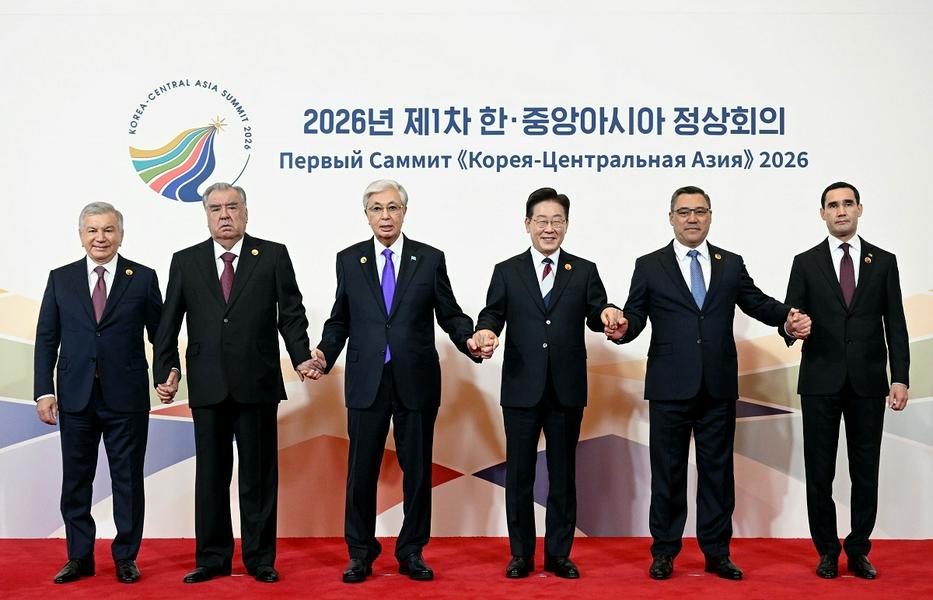 17 September17.09Summit of Morning FreshnessCritical minerals, artificial intelligence — what else was discussed at the “Central Asia–Korea” meeting
 -
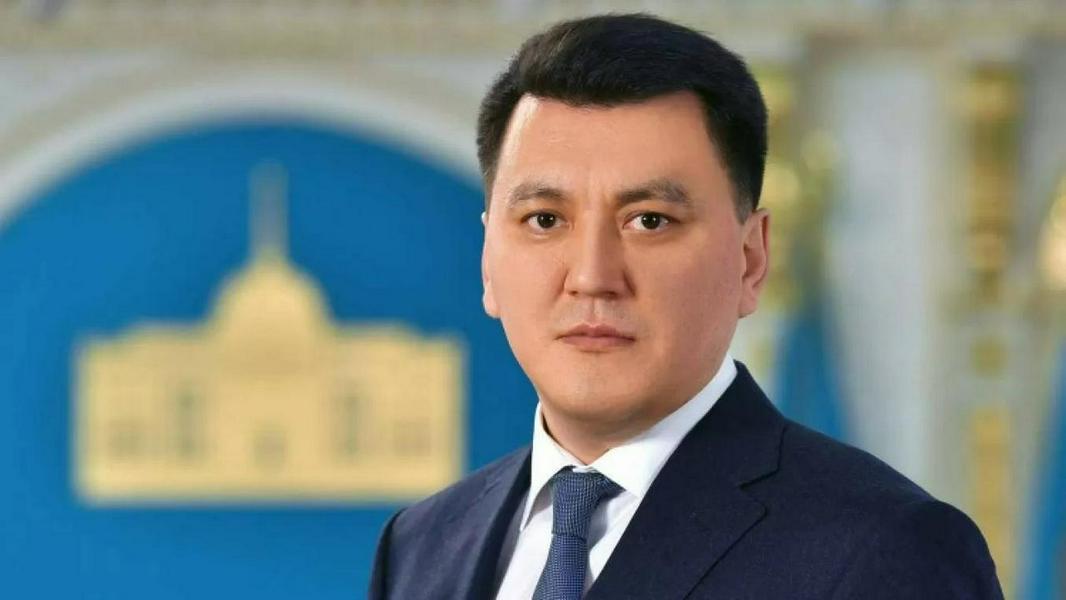 02 September02.09Who Are You, Mr. Vice President?From Analyst to Kazakhstan's Second-in-Command: How Erlan Karin's Views Have Evolved
-
An Islamic civilization media forum in Tashkent gathered over 300 journalists from nearly 50 countries
-
Observers and experts assess Kazakhstan’s first elections to the new Kurultai parliament
-
Berit Lindeman, Secretary General of the Norwegian Helsinki Committee, on democracy and the parliamentary campaign in Kazakhstan
-
Human rights defender and journalist Farid Tukhbatullin on the past, present, and future of the Turkmen people