 Photo: Press Service of the President of Kyrgyzstan
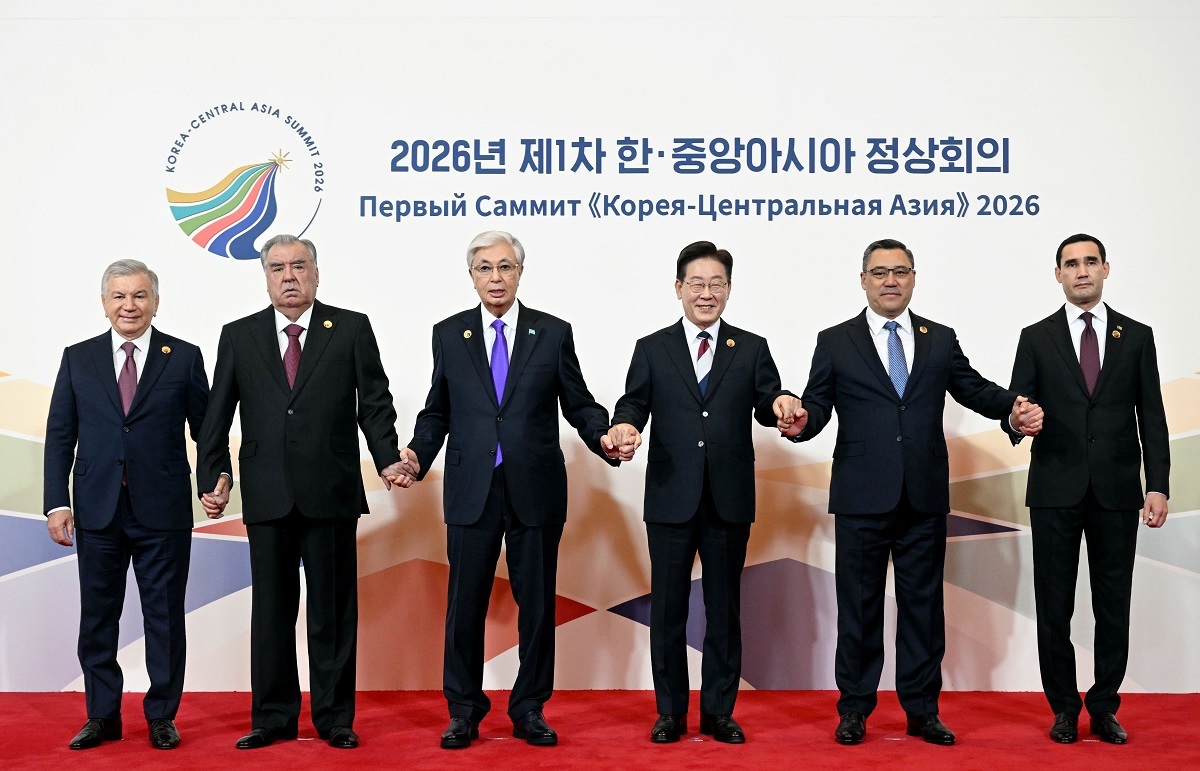
On 16 September, Seoul hosted the first-ever Central Asia–Korea summit, attended by the presidents of Kazakhstan, Kyrgyzstan, Tajikistan, Turkmenistan, Uzbekistan and South Korea. The accompanying programme was packed with bilateral meetings, expanded-format talks, business forums, interagency sessions and more.
The participants discussed cooperation in industry, trade, investment and a range of economic sectors. A recurring theme was collaboration on critical minerals, green energy and advanced technologies, including artificial intelligence (AI). Fergana looks at what else was discussed at the C5+1 summit.
Kazakhstan
President Kassym-Jomart Tokayev said South Korea offers one of the most inspiring examples of national advancement in the modern world. By prioritising education, innovation and human capital, he said, the country had rapidly become one of the world’s leading technological powers.
The Kazakh president then outlined several areas of partnership that deserve particular attention. These included trade and economic ties. According to Tokayev, trade between Central Asia and South Korea exceeded $10 billion last year, with Kazakhstan accounting for roughly half of that total. The momentum is continuing: commercial agreements worth $19 billion were signed during the current visit.
Tokayev said Kazakhstan would continue creating favourable conditions for Korean investors and companies. One measure, he noted, is the recently launched Altyn Visa programme.
The president also highlighted the importance of the first meeting of industry ministers from the Central Asian republics and South Korea. He proposed launching an Industrial and Technological Development Partnership in the C5+1 format, creating a portfolio of flagship joint projects focused on localising production, technology transfer, regional cooperation and exports of finished goods.
Logistics was also named among the priorities, particularly increasing transit volumes and making extensive use of the Trans-Caspian International Transport Route.
Kazakhstan’s leader invited Korean partners to establish joint ventures in the oil and gas sector. He added that an initiative for a Green Energy Complex in the East Kazakhstan Region is currently under discussion.
Tokayev described South Korea as one of the leaders in the global technological race and welcomed the fact that joint projects are already operating in Kazakhstan. They include Woosong University in Turkistan and an AI Institute in Kyzylorda established with SeoulTech’s participation. A branch of the Korea Advanced Institute of Science and Technology is expected to open in Alatau City, while an AI Talent programme will train artificial-intelligence specialists for countries across the region.
Speaking about critical materials, Tokayev said Kazakhstan’s resource potential, combined with Korea’s technological capabilities, opens broad prospects for mutually beneficial cooperation. The partnership aims to build an integrated production chain—from raw-material extraction to advanced processing and the manufacture of finished products, including semiconductors, microelectronics, batteries and robots.
Kyrgyzstan
President Sadyr Japarov said the Seoul summit had opened a new chapter in cooperation between Central Asian republics and South Korea. Central Asia, he said, has become a dynamic, cohesive and economically interconnected space, built on trust, regional cooperation and shared long-term interests.
He described South Korea as a reliable partner, particularly in investment, trade, transport, energy, digitalisation and education.
At the same time, Japarov outlined priorities for deeper engagement. He proposed strengthening the role of foreign ministers’ meetings within the C5+1 format, giving the mechanism responsibility for political coordination and monitoring the implementation of agreements.
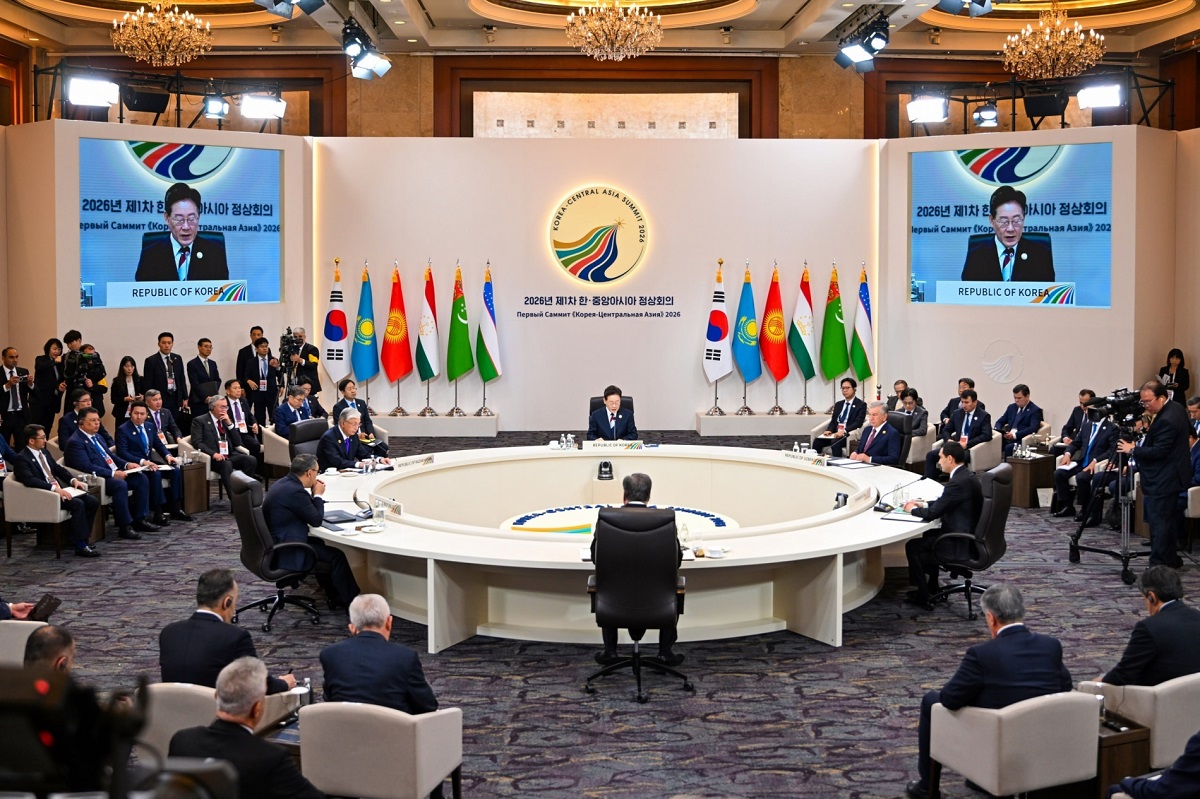 Photo: Press Service of the President of Uzbekistan
In the economic sphere, Japarov called for an Investment Council of state institutions to be created on the basis of the existing consultative mechanism for industry ministers. He also suggested developing a unified portfolio of major projects and establishing a joint investment fund to finance priority initiatives, localise production and help Korean companies enter Central Asian markets.
He separately addressed cooperation in advanced technology and AI, proposing a network of joint pilot technology sites.
On climate issues, the Kyrgyz president proposed launching a Partnership for Climate Resilience in Mountain Regions and invited all interested parties to the Bishkek+25 global summit, due to take place in 2027. He also called for closer cooperation in hydropower and green mobility.
Japarov identified human-capital development as another systemic priority. He urged his counterparts to expand educational programmes, academic exchanges and joint research.
By the next Central Asia–Korea meeting, he said, the countries should be able to demonstrate tangible results: production facilities launched, investments attracted, technologies introduced and new opportunities created for citizens.
Tajikistan
President Emomali Rahmon noted the particular importance of the summit amid the contradictory conditions of today’s world. He said that the Central Asia–Korea forum had become an effective mechanism for strengthening multilateral partnership in recent years.
According to the Tajik leader, elevating cooperation to the level of a heads-of-state meeting reflects sustained efforts to promote shared development and broaden international ties in the interests of lasting peace and stability in the region. Rahmon praised Seoul’s New Northern Policy, calling it an important element in strengthening technological connectivity between Central Asia and the advanced economy of the Republic of Korea.
The Tajik president expressed interest in continuing economic cooperation and building resilient supply chains. He also stressed that countering climate threats and tackling global challenges—including climate change, freshwater shortages and glacier melt—require closer cooperation among all regional states and their partners.
Turkmenistan
President Serdar Berdimuhamedov focused his colleagues’ attention on combining Central Asia’s abundant resources with South Korea’s advanced technologies.
First and foremost, he discussed cooperation with enterprises in Turkmenistan’s fuel and energy sector. Berdimuhamedov invited Korean partners to participate in developing natural-gas reserves at a number of fields. Such cooperation, he said, should lead to new production capacity for high-value goods, particularly fertilisers and petrochemical products.
Berdimuhamedov also said cooperation should be expanded to develop transit corridors through Central Asia and Caspian Sea port infrastructure, as well as to introduce smart logistics technologies in shipbuilding. He described cooperation on modernising the region’s water infrastructure through Korea’s resource-saving systems as equally important.
The Turkmen president also expressed readiness to work with partners on artificial intelligence, industrial management, fibre-optic cable production and the construction of smart cities, citing Turkmenistan’s Arkadag as an example.
Uzbekistan
President Shavkat Mirziyoyev said that as early as 2007, South Korea had shown strategic foresight by becoming one of the first countries in the world to recognise Central Asia’s enormous potential for close, mutually beneficial partnership. Korea’s contribution to the region’s industrialisation, infrastructure modernisation and the creation of a solid foundation for sustainable development has therefore been substantial, he said.
In his summit address, Mirziyoyev set out the main directions for further cooperation between the region and South Korea.
 Photo: Press Service of the President of Uzbekistan
First, he said, the partners should establish a long-term planning horizon. This is especially important in a world where the pace of global change increasingly outstrips countries’ ability to adapt. New demands are emerging in education, technology and human-capital development. In response, Mirziyoyev proposed developing a conceptual framework titled Central Asia–Korea: A Partnership for Accelerated Development.
The next task, he said, is to integrate trade, economic and investment opportunities into a single business logic. Central Asia is no longer merely a supplier of raw materials; it is increasingly producing higher-value goods and expanding the scope of cooperation. Mirziyoyev also backed the idea of a platform for meetings of industry and trade ministers. Such an approach, he said, could raise trade between the region’s countries and South Korea to $20 billion by 2030.
The Uzbek president also called for the active development of a partnership on critical minerals, citing enormous demand for such resources. Given Central Asia’s mineral reserves, he said, the region could soon become a leading player in the global market. Mirziyoyev proposed creating a Regional Investment Alliance for Critical Minerals, which would establish major processing clusters covering the entire production cycle through to high-value finished goods.
Another dimension of cooperation stems from the needs of green development and climate-change adaptation. Here, Uzbekistan’s leader proposed launching a Climate and Carbon Partnership under the C5+1 formula.
Finally, Mirziyoyev advocated joint work to unlock the potential of the younger generation. Central Asia, he noted, is a region of exceptional demographic energy, with people under 30 accounting for more than half of the population. He proposed developing human capital around the principle of “demand, training and employment”.
Republic of Korea
Addressing his Central Asian counterparts, President Lee Jae-myung said the “spirit of the Silk Road,” which once linked East and West, must now be revived.
The Korean leader said the world is entering a new era of upheaval in which the economy, energy, markets, technology and security are closely interconnected. He proposed developing the partnership across several priority areas. In particular, he called for diversifying global supply chains by combining Central Asia’s rich reserves of critical minerals and energy resources with South Korea’s expertise in mineral exploration and processing.
Cooperation in the C5+1 format, he added, should move beyond individual projects towards the joint development of the republics’ industrial capacity and the creation of new manufacturing industries producing higher-value goods. This approach would ultimately create jobs and increase exports to third countries.
Lee emphasised that Korea and Central Asian states have already concluded agreements providing for long-term cooperation in such key areas as critical minerals, energy, infrastructure construction and the digital transformation of industries. They have also approved an initiative on cooperation in artificial intelligence and other technological innovations.
“The combined strengths of Korea and Central Asia offer unlimited opportunities to address common challenges together, ultimately accelerating the achievement of mutual prosperity,” Lee Jae-myung concluded.
Seoul Declaration
The Central Asia–Republic of Korea summit adopted the Seoul Declaration.
The document is based on agreements on cooperation between the region’s countries and the Korean authorities across a broad range of economic and other fields. It provides for stronger cooperation in:
- Security, including the fight against terrorism, drug trafficking and cyber threats.
- Trade, investment, transport, infrastructure, aviation and agriculture.
- Critical minerals and energy.
- Digitalisation, artificial intelligence and new technologies.
- Healthcare, education and culture.
The declaration also includes provisions on expanding humanitarian contacts and supporting Koryo-saram, ethnic Koreans living in Central Asia.
The parties further agreed to hold the C5+1 summit every two years. The next meeting is scheduled for Astana in 2028.
-
 14 February14.02From Revolution to Rupture?Why Kyrgyzstan Dismissed an Influential “Gray Cardinal” and What May Follow
 -
 24 December24.12To Clean Up and to ZIYAWhat China Can Offer Central Asia in the “Green” Economy
 -
 23 December23.12PhotoTokyo DriveJapan to invest about $20 billion in projects across Central Asia over five years
 -
 17 December17.12Sake for SixCentral Asia’s Rapprochement with Japan Comes with Hidden Pitfalls
 -
 15 October15.10A Step Back into the Middle AgesWhy Kyrgyzstan Should Not Reinstate the Death Penalty
 -
 17 September17.09Risky PartnershipWhy Dealing with China Is Harder Than It Seems at First Glance
-
Demonstrators in Bishkek protest against the draft law “On the manipulation of information”
-
Tashkent sends troops to Russia’s Victory Day Parade for the first time. There they took part alongside their neighbours
-
With four months to go until the parliamentary elections in Kyrgyzstan, will a new party of power emerge?
-

Kyrgyz deputies mobilise against anti-corruption group Chong Kazat’s rhetoric