Twenty-five international nongovernmental organizations have sent a formal appeal to the World Bank and ten other lending institutions, accusing the developers of the Rogun hydropower project of manipulating international environmental protection standards. According to the environmental coalition Rivers without Boundaries, the authors of the appeal say the project’s impact on Central Asia’s river ecosystems has been deliberately understated.
The complaint is based on an independent expert report titled “Rogun HPP vs. Biodiversity.” It states that:
▪️ the project’s updated Environmental and Social Impact Assessment does not comply with the World Bank’s key standard ESS6, designed to protect natural habitats;
▪️ the developers deliberately underestimated the area of valuable natural territories that would be flooded and excluded hundreds of kilometers of river ecosystems from consideration;
▪️ instead of conducting full-scale seasonal field research, the assessment relies on outdated data more than a decade old and on fragmentary water-DNA analysis. This approach, the report notes, does not allow for any reliable assessment of populations of rare fish and wildlife. Species at risk include the Amu Darya trout, Turkestan catfish, Central Asian otter, and several birds of prey.
The current version of the project documentation effectively legalizes the destruction of a river ecosystem without adequate restoration measures, said Evgeny Simonov, international coordinator of Rivers without Boundaries (designated a foreign agent in Russia).
“Project developers engaged in blatant manipulation by refusing to recognize the Vakhsh River within the inundation zone as a ‘natural habitat,’ even though it fully meets the World Bank definition. This allowed them to exclude the requirement for compensation across 98 percent of the project’s impact area. In essence, they propose turning 170 kilometers of a living, fast-flowing river into a stagnant dead reservoir without offering any real measures to compensate for the damage to the river ecosystem and its endemic species,” Simonov said.
The most alarming issue, experts note, is the project’s refusal to assess the dam’s impact on the lower Vakhsh and Amu Darya.
The documentation ignores how changes in river flow could affect the UNESCO World Heritage site Tigrovaya Balka Nature Reserve and internationally recognized wetlands in the Amu Darya Delta. Instead of scientific modeling of changes in river discharge and sediment transport, the authors cite Tajikistan’s “political commitments” to maintain the current flow regime.
Alexander Kolotov, regional director of Rivers without Boundaries, stresses that political declarations cannot replace scientific analysis.
“We see an attempt to substitute serious scientific assessment with political slogans. The claim that filling an enormous reservoir over sixteen years and then operating a hydropower cascade will have no impact downstream defies physics, biology, and all previous experience with large dams. Unique tugai forests and endangered fish—such as the Amu Darya shovelnose sturgeon and the asp-like pike—may disappear forever unless real safeguards are introduced, including guaranteed environmental releases that mimic natural floods,” Kolotov said.
Experts also found that the proposed biodiversity management plan contains no concrete measures to protect aquatic species. Measures such as planting trees cannot compensate for the loss of the region’s last natural floodplain forests and river habitats downstream of the Rogun Dam.
Environmental organizations are calling for a complete overhaul of the project’s environmental assessment and for a realistic compensation strategy, including regular environmental releases into the Lower Vakhsh.
The coalition also urges granting the Panj River official status as a “free-flowing river” to preserve what remains of the basin’s biodiversity. If these demands are ignored, international financing of the project will directly violate lenders’ own environmental policies and, more importantly, lead to irreversible loss of biodiversity of both regional and global significance, the groups warn.
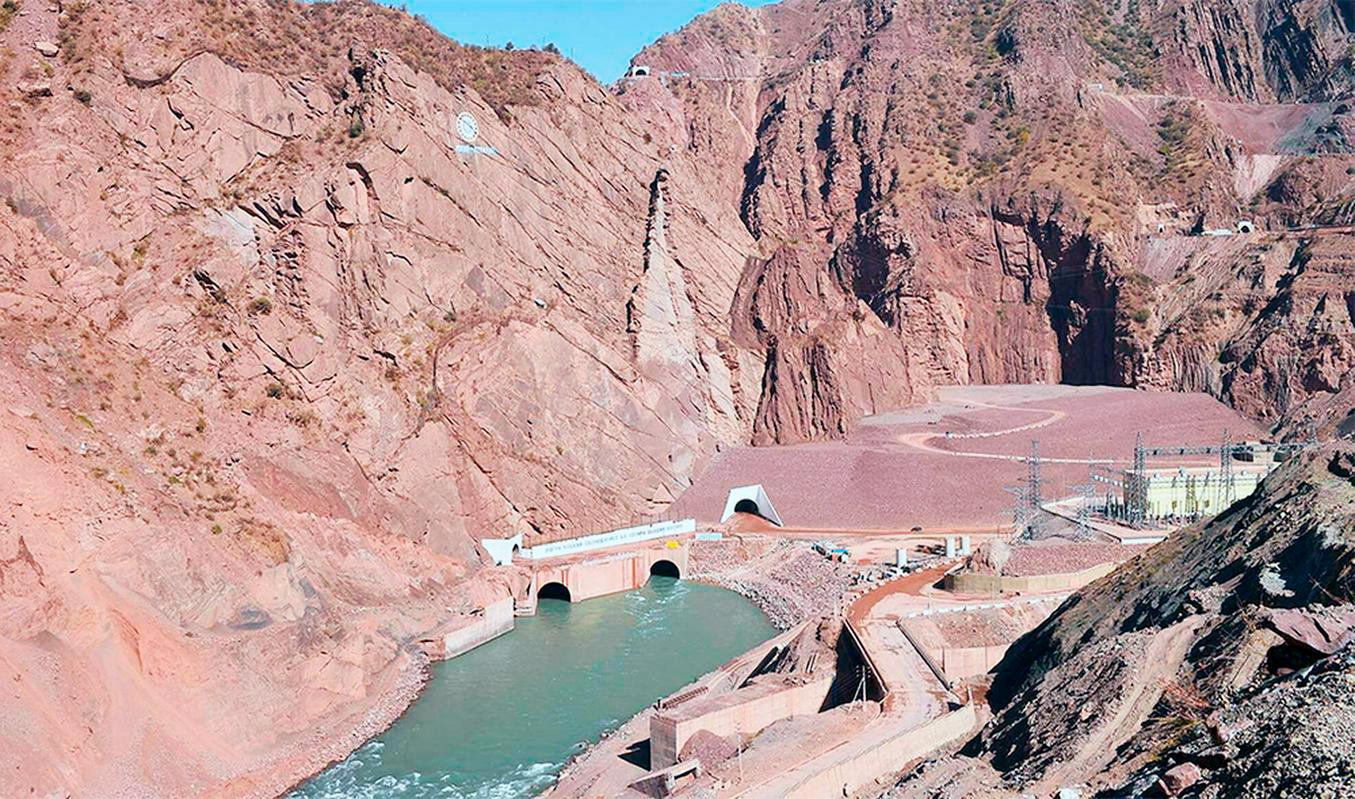
ℹ️ Rogun HPP is Tajikistan’s largest energy project. Its planned capacity is 3,600 MW, and its six turbines are expected to generate more than 13.1 billion kWh annually. Two 600 MW units are currently in operation. Completion of all construction phases is planned for late 2031, with total costs estimated at $6.29 billion.
Between 2008 and 2024, Tajikistan allocated 42.5 billion somoni (around $4 billion) for construction. In December 2024, the World Bank approved a $350 million grant for the first phase of the completion program. The Saudi Fund for Development, the Asian Infrastructure Investment Bank, and several other institutions have also joined the process.