The World Bank has said it is prepared to provide Tajikistan with up to $1.8 billion in financing if the country implements major economic reforms, Asia-Plus reports, citing a World Bank document. The potential funding would combine concessional and private financing under the bank’s new Country Partnership Framework for fiscal years 2026–2032.
Access to the full $1.8 billion would depend on ambitious reforms. The financing would follow a unified World Bank Group approach, bringing together the International Development Association (IDA), the International Finance Corporation (IFC) and the Multilateral Investment Guarantee Agency (MIGA).
Of the total, $1 billion to $1.2 billion would come from IDA financing over seven years, assuming Tajikistan’s base allocation is maintained through subsequent IDA replenishment cycles. The final amount would depend on the association’s available resources, global conditions and individual projects’ eligibility. The document stresses that the figures are indicative and represent broad estimates.
The remaining potential financing, up to $600 million, is tied to mobilizing private capital. This includes up to $500 million in potential IFC investments and an estimated $100 million in MIGA participation, contingent on the implementation of public-private partnership (PPP) projects.
The World Bank expects Tajikistan to implement reforms, reduce investment risks and become more attractive to private investors. A significant share of the private capital mobilized is expected to come from investment in infrastructure PPPs, particularly airports, water supply and irrigation. The broader program also covers energy, finance, taxation, digitalization, social protection, education, healthcare and agriculture.
A major change concerns the terms of Tajikistan’s financing: beginning in fiscal year 2027, the country is to transition from IDA grants to loans. The bank attributes the shift to rising per capita income, which means Tajikistan no longer qualifies for its previous grant financing arrangements.
World Bank financing is expected to be linked to measures that strengthen macroeconomic and debt sustainability, improve transparency and raise the quality of public administration. The document also calls for improvements to public procurement and stronger institutional capacity in government agencies.
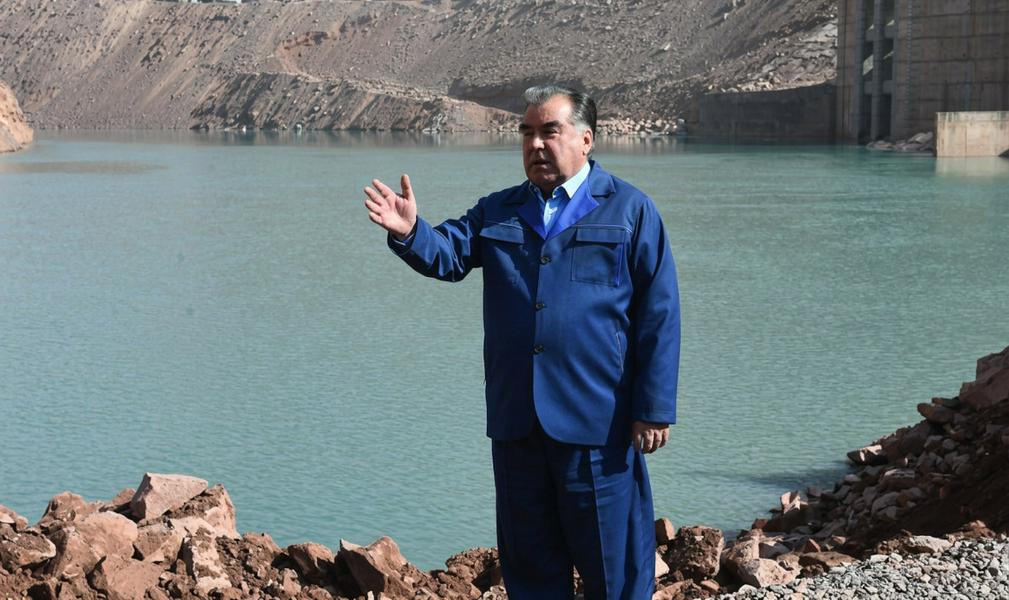
The program comprises 25 projects, including tax and financial sector reforms, digital infrastructure development and modernization of the national statistical system. It also includes support for the Rogun and Nurek hydropower plants, rural electrification, regional electricity trade, water supply and irrigation, as well as projects to make agriculture more resilient to natural disasters.
The World Bank rates the program’s overall implementation risk as high. Of the nine categories in its risk assessment system, five are rated high, one substantial and three moderate. The high-risk categories cover politics and governance, macroeconomic conditions, institutional capacity for implementation, misuse of funds and conflict.
The document separately highlights contingent liabilities at state-owned enterprises and the economy’s heavy dependence on migrant remittances. It also identifies a weak business environment and poor governance as barriers to foreign direct investment, private investment, innovation and job creation. Macroeconomic concerns include a high risk of debt distress and fiscal risks arising from obligations related to the Rogun hydropower plant.
The World Bank will review the program’s business plan annually, adjusting its support to reflect changes in Tajikistan’s priorities and progress on reforms. The process will involve coordination within the bank’s unified country team and an “if-then” approach to investment decisions.
The World Bank remains Tajikistan’s largest donor. In 2024, it accounted for 38% of the country’s international donor financing.