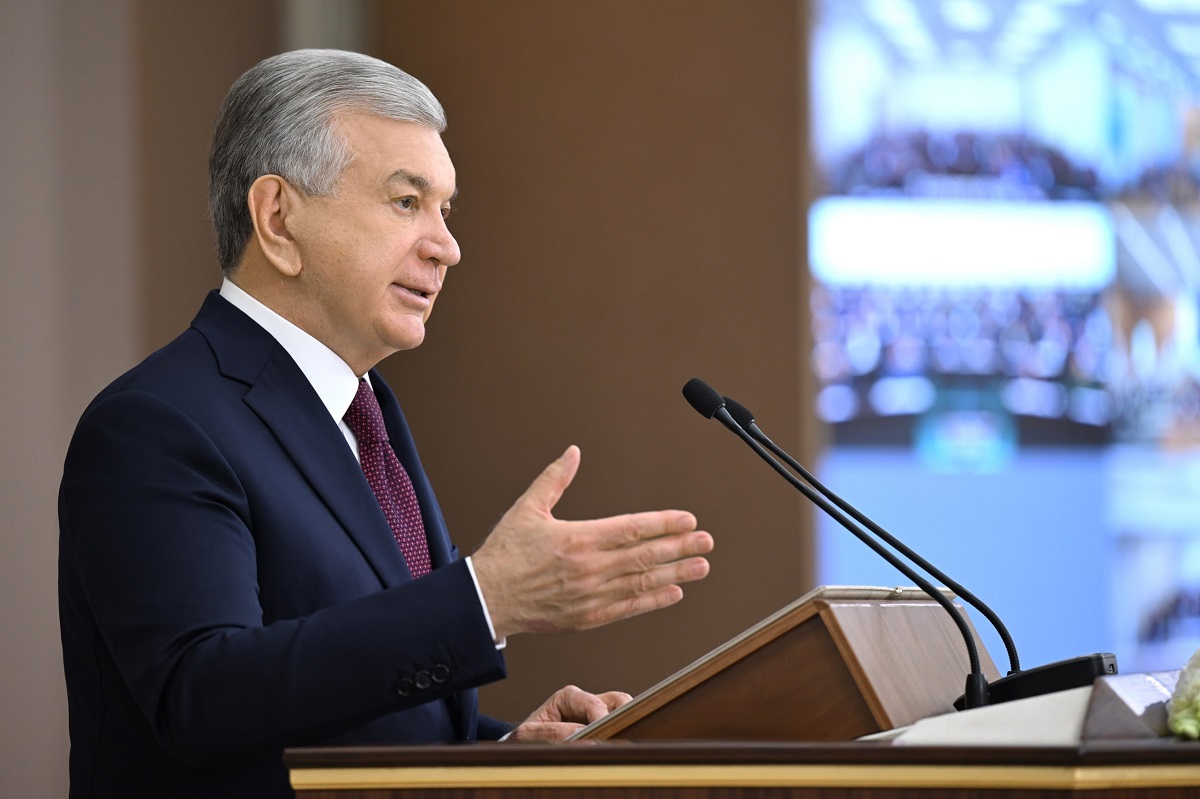
 Shavkat Mirziyoyev. Photo courtesy of the press service of the President of Uzbekistan
Uzbekistan plans to launch a wide array of transport and logistics ventures, focusing on major highways, railways, airports, and related infrastructure. President Shavkat Mirziyoyev has called on investors and business leaders to actively participate in these initiatives, according to the head of state's press service.
Speaking at a meeting with business leaders, the president noted that the state has allocated 80 trillion soums ($6.6 billion) to road sector development over the past decade, repairing and reconstructing more than 130,000 kilometers of motorways. Uzbekistan is now positioned to attract up to $20 billion in investment into the industry.
Currently, the country is executing five major toll road projects spanning 593 kilometers with a combined value of $5.6 billion. Regional administrations have outlined 131 projects worth $4 billion, while initiatives valued at $6.5 billion are underway in partnership with international financial institutions.
The president urged the private sector to participate, emphasizing that along with managing highways, investors will be granted rights to develop roadside retail and commercial service facilities.
Mirziyoyev emphasized that Uzbekistan demands high-quality roads. Consequently, authorities will soon make the use of polymer-modified bitumen materials and geotextile technologies mandatory in national road construction standards.
Addressing the rail network, the head of state remarked that the launch of the China–Kyrgyzstan–Uzbekistan railway will increase freight traffic tenfold, reaching 15–16 million tons annually. By 2030, Uzbekistan plans to lay 545 kilometers of new tracks and boost the share of electrified rail lines to 65%.
Authorities have also drafted projects to modernize several domestic branches and build a high-speed line linking Tashkent and Samarkand, with total investment estimated at $8 billion. Financial institutions and private investors are invited to bid on these opportunities. Additionally, the government intends to expand the freight car fleet by 5,000 to 6,000 units, backing private operators with tax breaks and discounted rail access fees.
Over the next decade, Uzbekistan aims to scale its logistics capacity to 80 million tons by constructing nine major logistics hubs valued at a combined $1.6 billion, Mirziyoyev stated.
Turning to aviation, the president noted that the country's operational airports now number 18. Air passenger traffic is projected to reach 17 million this year, with a near-term target of 25 million travellers.
The president highlighted the planned $5 billion Aerocity project adjacent to Tashkent's new international airport. The multifunctional development will integrate logistics hubs, e-commerce platforms, retail centers, hotels, and residential areas into a single ecosystem.
To bolster local carriers, the government will peg jet fuel prices to global benchmarks and introduce tax and customs exemptions on imported fuel, spare parts, and aircraft leases. These incentives aim to expand the national fleet to at least 250 aircraft by 2030, with dedicated preferences reserved for airlines hiring Uzbek pilots.
To accelerate airport infrastructure upgrades, airport management companies will be exempt from property and land taxes through 2030, Mirziyoyev added.