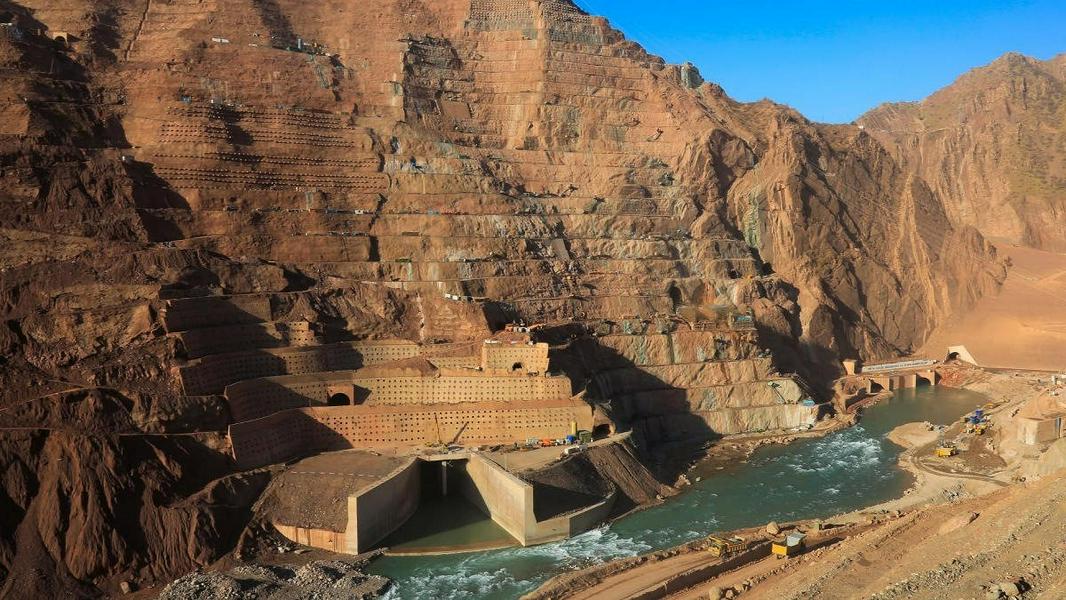
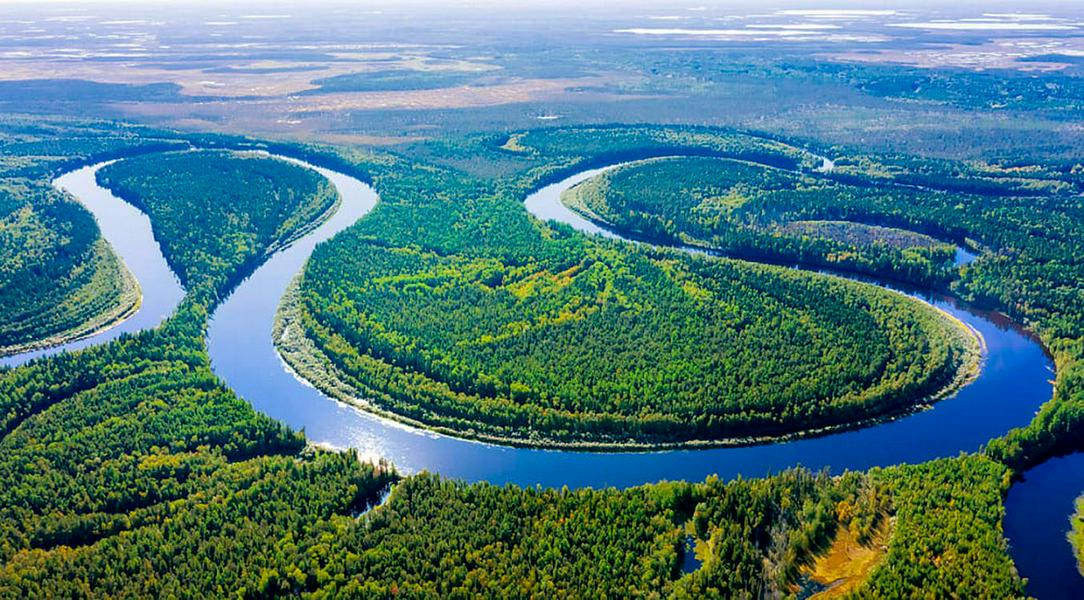
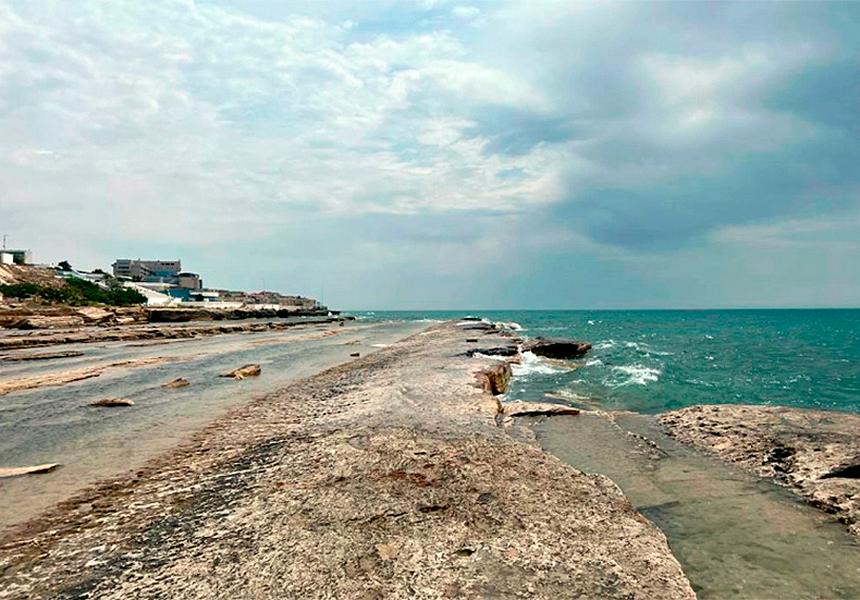
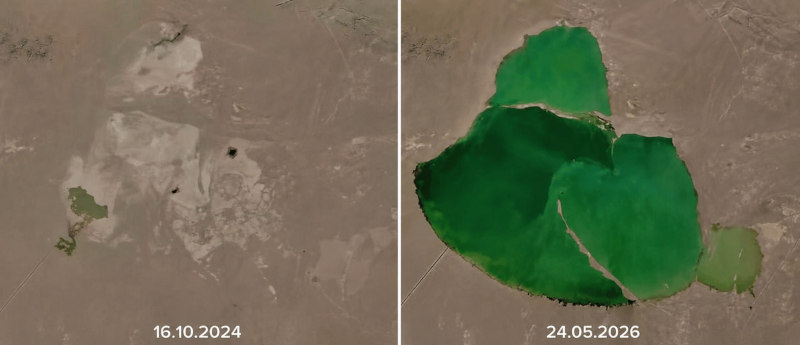
 An old photograph of the area and a new photo taken in May 2026. Collage by Fergana
In the Bukhara region of Uzbekistan, north of the town of Gazli in Peshkun district, a large lake has formed over the past six months amid precipitation reaching roughly three times the climatic norm. The new body of water has appeared in the Shurbulak area, previously considered a waterless desert, and its surface is now estimated at about 80 square kilometers, exceeding the area of Bukhara city and comparable to the country’s largest reservoirs.
Specialists note that the lake emerged not only due to natural factors but also as a result of human intervention. As part of a regional fisheries development program by the Ministry of Water Resources, a network of small channels was dug to divert groundwater from surrounding areas into the nascent lake.
The main collector channel feeding the reservoir stretches for about 126 kilometers, and together with intense rainfall, this has led to a rapid buildup of water.
Ecologists warn that the appearance of such a large reservoir in a desert zone could have both positive and potentially risky consequences. On the one hand, it may create opportunities for fisheries and alter the local microclimate; on the other, it could disrupt the existing ecosystem and affect the broader water balance of the region. Experts stress that the new lake will require careful monitoring and management to assess its long‑term environmental and socio‑economic impact.