 Photo: Turkmenportal
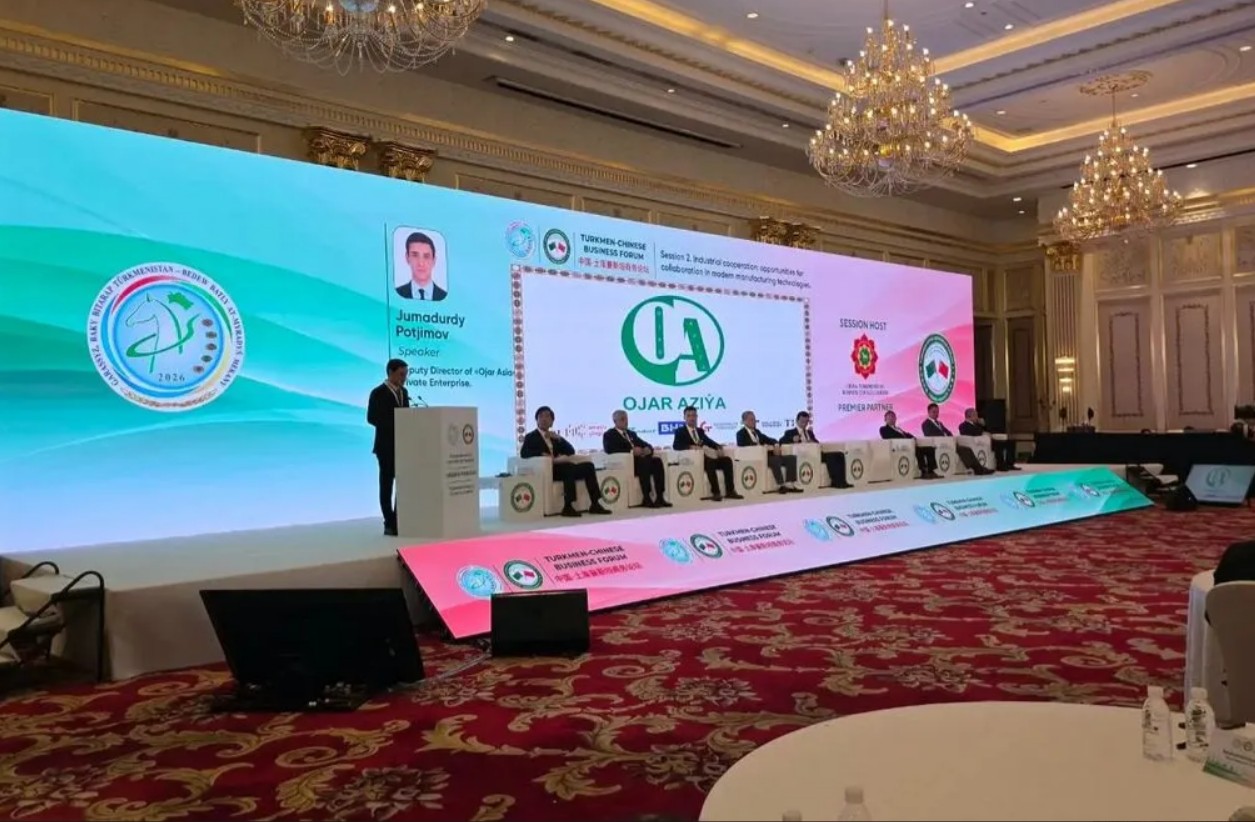
Turkmen company Ojhar Asia has presented proposals to Chinese partners to construct a high-speed motorway connecting Sarahs, Mary, and Serhetabat, along with a major logistics hub in Afghanistan's Torghundi. The projects were showcased during the Turkmen-Chinese Business Forum held in Shanghai on November 6–7, Turkmenportal reported.
The motorway is designed to connect Sarahs on the Iranian border with Mary and Serhetabat near the Afghan border. The second initiative envisions a warehousing and freight terminal at the Torghundi dry port, which serves as a vital cross-border rail link between Turkmenistan and Afghanistan.
The company also unveiled plans to build a hotel and logistics complex, a flour mill, and a grain elevator in Serhetabat, alongside commercial greenhouses and a multipurpose livestock farming complex in Mary Province.
During the forum, Ojhar Asia signed four memorandums of understanding with Chinese partners. One agreement, sealed with Link Global International Logistics, targets collaboration in international freight forwarding and supply chain services. Other deals focus on artificial intelligence and smart systems deployment, trade and investment growth, and deliveries of construction and agricultural machinery.
In total, Turkmen and Chinese companies signed 12 memorandums at the gathering. More than 350 Chinese business representatives and upwards of 120 delegates from Turkmenistan attended the event, co-organized by the Chamber of Commerce and Industry of Turkmenistan and TMT Consulting Group, a subsidiary of Ojhar Asia. The forum coincided with the 9th China International Import Expo (CIIE 2026).
Torghundi remains a cornerstone of rail transit between Afghanistan and Turkmenistan. In September 2024, the two countries launched construction on the Torghundi–Sanabar line, a future spur of the planned railway to Herat, while starting work on cargo warehousing facilities at the border crossing.
In July 2025, Turkmenistan and Afghanistan inked a $5 million agreement to develop the Torghundi dry port with new freight terminals and storage facilities. Ashgabat is funding the project, with provisions to recoup capital expenditures through future operating revenues.
Kazakhstan has also moved to tap into the regional transit corridor. In April 2025, Astana and Kabul signed a memorandum of intent to construct the Torghundi–Herat–Kandahar–Spin Boldak railway line, a strategic route intended to connect Central Asia with Pakistan and open alternative access to Indian Ocean seaports.